Why Bangalore’s HNIs Are Investing in Luxury Villas as Lifestyle Assets
For a certain kind of Bangalore buyer, the question is no longer where they should live. It is where they should also live. Across the city’s most affluent circles, a second home in Bangalore has quietly become as ordinary a line item on the personal balance sheet as a second car once was, except this asset does something a car cannot: it gives its owner somewhere to actually disappear to. The homes changing hands in this segment are rarely bought to replace a primary residence in Koramangala, Indiranagar or Whitefield. They are bought to sit alongside it, a short drive away, built for an entirely different rhythm of life.
A New Definition of the Second Home
Traditionally, a second home in the Indian context meant Goa, Coonoor or a hill station retreat used twice a year and left shuttered the rest of the time. That model is fading for Bangalore’s HNIs, replaced by something more useful: a villa close enough to the city to be reached in under an hour, yet far enough from its congestion to feel like a genuine change of scene. This is a second home built for weekly use, not annual pilgrimage, and North Bangalore is where that shift is playing out most visibly.
The distinction matters because it changes what buyers are actually evaluating. A holiday home is judged on scenery alone. A usable second home is judged on drive time, on whether a video call can be taken reliably from the study, on whether the household staff structure supports spontaneous weekend visits, and on whether the property still feels significant when set against the primary residence rather than a step down from it. This is precisely the shift turning villas into genuine luxury villas as lifestyle assets rather than static holiday homes.
Who Is Making This Move
The buyer profile behind this trend is fairly consistent across transactions in Bangalore’s upper luxury bracket. Senior technology executives who have spent the last decade inside high-pressure roles form the largest single group, closely followed by founders who have taken money off the table through an exit or a funding round, and dual-income HNI households where both partners hold demanding professional positions. What unites them is not net worth alone. It is a shared experience of a working life so dense with meetings, screens and city noise that the idea of a second, quieter address has stopped feeling indulgent and started feeling necessary, a pattern increasingly visible across HNI real estate investment in Bangalore more broadly.
The Push: Escaping the Density of the Core City
Bangalore’s core neighbourhoods, for all their infrastructure and social capital, have become genuinely difficult to live in at a certain income level. Traffic corridors that took twenty minutes a decade ago now routinely take fifty. Plot sizes have shrunk as land values have risen, and even well-appointed apartments rarely offer more than a balcony’s worth of outdoor space. For a buyer accustomed to space, quiet and control over their environment, this is a slow, daily erosion rather than a dramatic crisis, and it is precisely that slow erosion which makes a second home financially and emotionally justifiable.
The Pull: A Home That Still Feels Like Bangalore
What makes North Bangalore different from a hill station retreat is that it does not ask the buyer to leave their life behind. A villa off IVC Road in Devanahalli is close enough that a founder can host an eight o’clock dinner for colleagues without anyone needing to plan an overnight stay, yet the drive there passes through open land and considerably less traffic than the city core. It reads as an extension of Bangalore rather than an escape from it, which is exactly what makes it usable often enough to justify the purchase in the first place.
It is worth noting that this is not exclusively a domestic phenomenon. A meaningful share of enquiries in this category now comes from NRI professionals based in Dubai, Singapore and the United States who visit Bangalore two or three times a year and want a base that does not depend on relatives or hotel bookings. For them, the second-home logic is even sharper: the villa doubles as a landing pad for family visits and a tangible link to home that appreciates whether or not they are physically present to enjoy it, particularly for villas near Kempegowda International Airport that fit neatly into an infrequent but recurring travel schedule.
Ask second-home buyers in this bracket what they actually do once they arrive, and the answers are almost never about luxury in the conventional sense. They talk about hearing bird sounds instead of horns. About a garden their children can run across without supervision. About hosting extended family for a weekend without everyone competing for bathroom time in a city apartment. The recurring theme is decompression: a physical and mental reset that a five-star staycation can approximate for a single night, but that only ownership, with its sense of permanence and personalisation, can deliver on a recurring basis, turning the property into something closer to a personal headquarters than merely another address on the map.
This is also where community design quietly does a great deal of work. A second home surrounded by a dozen other villas packed onto a compact plot does not decompress anyone. Low density, generous setbacks and genuine landscaping are not aesthetic preferences at this price point. They are the functional mechanism through which the psychological benefit actually gets delivered.
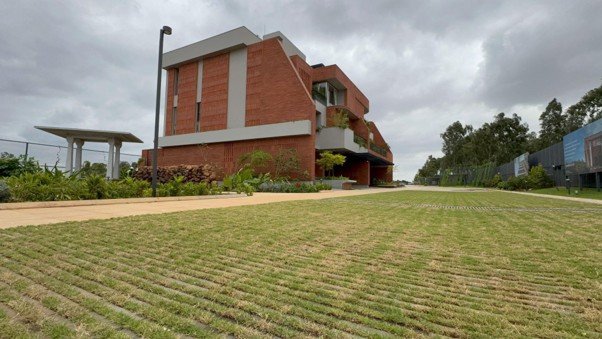
Source: White Lotus Amanvana
The Financial Logic of a Lifestyle Asset
None of this would matter to a sophisticated buyer if the numbers did not also work, and this is where the second-home villa distinguishes itself from a pure holiday property. Land along Bangalore’s north corridor, anchored by the airport and its surrounding economic zone, has shown sustained appreciation over the past decade, driven by a genuine supply-demand imbalance rather than speculative flipping. Buyers increasingly frame these homes not as a discretionary indulgence but as a long-term asset that happens to also be liveable, capable of generating rental income during the periods it sits unoccupied while continuing to appreciate quietly in the background.
This dual framing, part lifestyle asset and part investment, is precisely why the segment has grown resilient even through broader real estate slowdowns. A buyer chasing yield alone can be scared off by a soft quarter. A buyer who also wants somewhere to spend their Saturdays is far less likely to sell in a downturn, which in turn stabilises pricing across the entire micro-market. Realistic buyers also tend not to overstate rental income in these calculations. It functions best as a modest offset to holding costs and community charges during the months a villa sits empty, rather than as the primary justification for the purchase, which keeps expectations grounded and the asset’s appeal intact regardless of short-term rental demand. This resilience is a large part of why North Bangalore villa investment has held up better than more purely speculative pockets of the market.
Why North Bangalore Has Become Second-Home Territory
None of this works without infrastructure, and North Bangalore’s transformation into viable second-home territory is a direct function of what has been built around it over the past several years. The steady upgrade of IVC Road and the surrounding stretch that White Lotus has previously described as the golden corridor, along with the densification of the aerotropolis economic zone around Kempegowda International Airport and firming metro connectivity plans, has collectively closed the psychological distance between the city core and Devanahalli, even where the physical distance has barely changed.
For a second-home buyer, this infrastructure story matters more than it does for a primary-residence buyer, because usability is the entire point. A retreat requiring ninety minutes of unpredictable traffic each way simply will not get used often enough to justify itself. A retreat reachable in a predictable thirty-five to forty-five minutes, close to an international airport that many of these buyers pass through regularly for work, becomes something closer to a genuine extension of daily life, a dynamic increasingly visible in the newer wave of Devanahalli communities such as Amanvana.
What to Look For in a Second-Home Villa
- Predictable drive time from the primary residence, ideally under forty-five minutes in normal traffic
- Low-density community design with genuine open space rather than compact, tightly packed plotting
- Enough scale within the home itself, typically four bedrooms or more, to comfortably host extended family and guests
- Professional community management that keeps the property presentable without the owner’s constant involvement
- A location with independent economic momentum, such as proximity to an airport or business district, so the asset does not depend solely on the core city’s growth
Where Amanvana Fits the Thesis
This is the exact brief that Amanvana, White Lotus Group’s community of 95 four-bedroom terraced villas on IVC Road in Devanahalli, was designed against. Built across 14 acres with a low-density, resort-influenced masterplan, its position minutes from Kempegowda International Airport makes it as practical for a founder catching a Monday morning flight as it is restorative for a family spending a Saturday by the pool deck. The scale of the community, capped at 95 homes rather than the several hundred units many North Bangalore developments carry, is itself part of the second-home proposition: a smaller footprint means the low-density experience that decompression depends on is actually protected over time, not diluted as later phases get added.
For Bangalore’s HNIs increasingly thinking in terms of two addresses rather than one, that combination, meaningful proximity to both the airport and the city, genuine scarcity of scale, and a masterplan built around space rather than density, is what separates a second home that actually gets used from one that quietly becomes a maintenance liability. It is a large part of why Amanvana Bangalore keeps coming up in these conversations before a buyer has even finished their shortlist.
The Shape of Things to Come
The second-home thesis is still early in Bangalore, but the direction of travel is clear. As more of the city’s senior professionals and founders reach the point in their careers where time, not money, becomes the scarce resource, demand for homes that offer a genuine reset within reach of the city will only grow. North Bangalore, and the airport corridor in particular, is positioned to be where much of that demand lands over the coming decade.
Frequently Asked Questions
1. Why are HNIs choosing luxury villas in Devanahalli as second homes?
High-net-worth individuals seek lifestyle assets that offer immediate decompression within a predictable drive time (under 45 minutes) from central hubs. Projects offering luxury villas in devanahalli provide a tranquil retreat from urban density while staying seamlessly connected to business hubs and airport infrastructure.
2. How do villa projects near Bangalore airport balance lifestyle and investment value?
Properties situated near the airport corridor offer a rare dual benefit: immediate daily utility as a private sanctuary and steady long-term capital appreciation driven by regional economic growth. Selecting villa projects near bangalore airport allows owners to enjoy weekend living or frequent travel convenience while benefiting from resilient land values.
3. What makes White Lotus Amanvana ideal as a usable second home?
White Lotus Amanvana features a boutique, low-density masterplan of just 95 homes across 14 acres. Located off IVC Road, it combines resort-grade wellness amenities with expansive 4-bedroom layouts and professional property management. This ensures the villa stays pristine whether used as a weekend retreat or a permanent residence.
4. Why are HNIs moving away from traditional holiday homes toward luxury villas in North Bangalore?
Traditional holiday destinations like Goa or hill stations require significant travel time and often sit empty for months. Conversely, luxury villas in north bangalore function as usable weekly assets—close enough for spontaneous weekend getaways or hosting social gatherings without disrupting daily work routines.
5. What key factors should buyers evaluate before investing in luxury villas in Bangalore?
When choosing among the best luxury villas in bangalore, evaluate:
- Accessibility: Predictable drive time from your primary residence and major expressways.
- Density: High open-space ratios over compact unit arrangements.
- Management: Professional facilities management for hassle-free upkeep.
- Scalability: Layouts with 4+ bedrooms to comfortably accommodate extended family.