How to Evaluate a Luxury Villa Developer Before You Buy: A Due Diligence Checklist
Every developer in Bangalore’s luxury villa market describes their project as premium. Nearly all of them use the word bespoke somewhere in the brochure. At this price point, where a single villa can represent one of the largest financial commitments a buyer makes in their life, marketing language has stopped being a useful filter. What matters is not what a developer claims about their project, but what can actually be verified about the developer themselves, since it is the developer’s financial health, delivery discipline and institutional credibility that ultimately determine whether the home a buyer signs up for is the home they eventually receive.
This is not a suggestion that marketing itself is misleading, most developers genuinely believe in what they are building. It is simply a recognition that belief and brochures are not evidence, and that the tools for independent verification are more accessible today than most buyers realise. What follows is a practical framework built around six areas of scrutiny that, taken together, offer a far more reliable read on a developer than any single conversation with a sales team ever could.
Reading a RERA Filing Properly
Most buyers know to check that a project is RERA registered. Far fewer read the filing itself with any rigour. A RERA registration confirms that basic disclosures have been made, but the substance worth examining lies deeper: the promoter’s declared timeline against the project’s actual construction progress, the sanctioned plan against what is being marketed, and critically, the promoter’s history across other RERA-registered projects they have developed. Karnataka’s RERA portal allows a buyer to look up a promoter’s complete project history, including any registered complaints, delay penalties or litigation. This single check, which takes perhaps twenty minutes, surfaces more reliable information about a developer’s discipline than an entire sales presentation.
A pattern worth watching for specifically is repeated timeline extensions across a developer’s past projects. A single delayed project can reasonably be attributed to external factors: approval bottlenecks, material shortages, or macroeconomic disruption. A consistent pattern of delays across multiple projects is not bad luck. It is a signal about how the organisation plans and executes.
Communities built around fully verifiable filings, the standard to look for among RERA registered villas in Bangalore, are worth treating as the benchmark to compare everything else against.
Financial Health Signals
A developer’s financial structure has a direct, practical bearing on whether construction continues smoothly through market downturns. Projects funded predominantly through bank lending against clear collateral and disciplined debt servicing tend to be considerably more resilient than projects funded through aggressive pre-launch collections and rolling investor capital, where a slowdown in sales can directly stall construction. Buyers rarely have access to a developer’s full balance sheet, but several proxies are available: whether the project has approvals from recognised nationalised or private banks for home loans, which typically involves a degree of due diligence on the developer’s part, whether construction has continued at a visible, steady pace independent of sales momentum, and whether the promoter group has other operating businesses that suggest institutional financial discipline rather than a single-project entity with no track record to fall back on.
Delivered Portfolio Versus First Launch
There is a meaningful difference between a developer launching their first project and one with a genuine portfolio of delivered villa projects in Bangalore, occupied and lived in rather than simply marketed, and this difference deserves more weight in a buyer’s decision than it typically receives. A first-time developer may well execute brilliantly, but there is no independent evidence to verify that claim beyond their own presentation. A developer with several delivered projects offers something far more valuable: existing residents who can be asked directly about construction quality, how accurately the finished product matched what was promised, how responsive the developer was to post-handover issues, and whether the community has been maintained to the standard set at launch.
Speaking with residents of a developer’s earlier projects, even informally, is one of the single highest-value steps in this entire due diligence process, and one that surprisingly few buyers take the time to do.
Assessing Construction Quality Beyond the Show Flat
Show flats are, by design, the best possible version of a home, often finished with fixtures and detailing that differ meaningfully from the standard specification buyers actually receive. Evaluating construction quality properly requires stepping outside the show flat entirely. For under construction villas in Bangalore in particular, this means visiting the live site directly, if one is accessible, and looking specifically at structural details that are hard to fake: the consistency of concrete finishing, the alignment of masonry work, waterproofing detailing at bathroom and terrace junctions, and the quality of electrical and plumbing conduit work before it disappears behind finishing. None of these require specialised expertise to notice. Sloppy, inconsistent work at this stage is usually visible to an attentive layperson and correlates closely with the quality of what eventually gets handed over. It is also worth asking directly what brands and specifications are being used for structural essentials such as waterproofing membranes, plumbing fittings and electrical wiring, and requesting this in writing as part of the agreement rather than relying on verbal assurances during a site visit, since specifications communicated informally have a way of quietly changing between booking and possession.
Institutional Backing and Group Credibility
A developer’s broader institutional backing matters more at the luxury end of the market than it might at more affordable price points, because the buyer here is making a larger, longer-term commitment. Group credibility can be assessed through several concrete markers: the promoter group’s history and reputation outside real estate, whether the entity developing this specific project has institutional or private equity backing that implies external financial scrutiny, and whether the group has demonstrated staying power across multiple market cycles rather than emerging opportunistically during a single upswing. None of these markers guarantee quality on their own, but together they build a more reliable picture than a glossy corporate brochure ever will.
Location credibility deserves a mention here too, since it intersects closely with developer credibility. A developer entering an area with genuine, independently verifiable infrastructure momentum, government-backed road upgrades, airport-linked economic development, established utility and civic infrastructure, is making a fundamentally different bet than one entering a location purely on the strength of speculative future promises. Understanding a location’s trajectory, such as the shift North Bangalore has undergone as it decouples from the older, congested parts of the city, gives a buyer useful context for judging whether a developer’s confidence in a location is grounded in fact or simply in sales narrative.
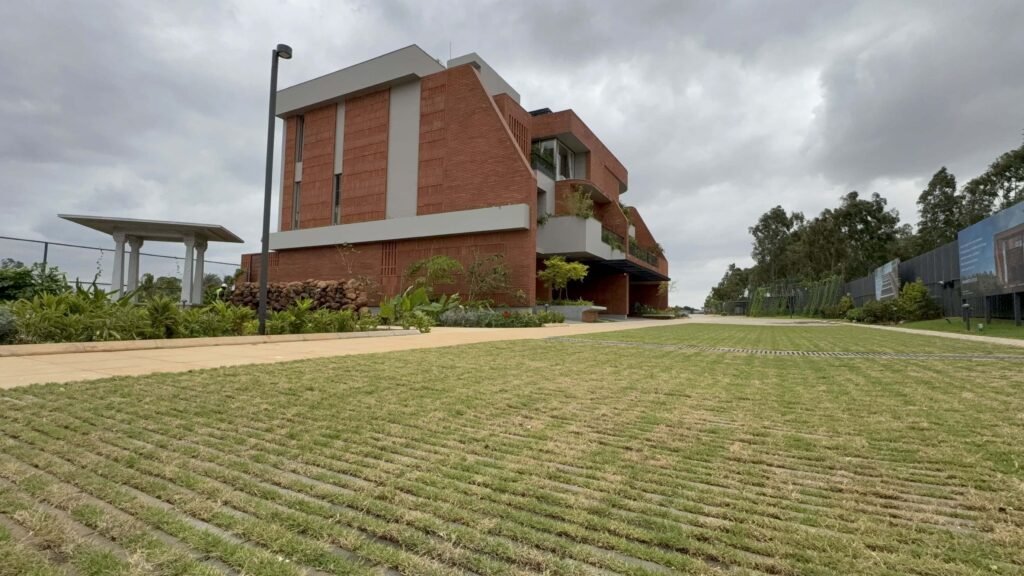
Source: White Lotus Amanvana
After-Sales and Community Management
The relationship between buyer and developer does not end at possession, and for a luxury villa community, what happens afterward matters as much as what happens before. A developer’s after-sales track record, how promptly defects are addressed, whether promised amenities are delivered to the original specification, and how professionally the community is transitioned to ongoing management, is often a better predictor of long-term satisfaction than anything visible during the sales process. This is worth investigating directly by asking existing residents of the developer’s earlier projects a specific question: if community management and after-sales support were the only criteria, would they buy from this developer again.
A Practical Due Diligence Checklist
- Look up the promoter’s complete project history on the Karnataka RERA portal, including any delays, complaints or litigation
- Verify whether major banks have approved home loans for the project, which implies an independent layer of financial scrutiny
- Speak directly with residents of the developer’s earlier, delivered projects wherever possible
- Visit an under-construction site to inspect structural and finishing quality firsthand, not just the show flat
- Research the promoter group’s broader institutional credibility and history outside this single project
- Ask specifically about after-sales responsiveness and how the community is managed post-handover
Applying This Framework in Practice
It helps to see how this framework applies to a real developer rather than treating it purely in the abstract, and White Lotus Group offers a useful benchmark for what disciplined institutional credibility looks like among luxury villa developers in Bangalore.
As the developer behind Amanvana, its 95-villa community on IVC Road in Devanahalli, the group’s standing rests on RERA-registered documentation that is fully verifiable, a masterplan built around the same low-density, long-term thinking this article has argued buyers should look for, and a broader positioning as a long-term asset developer rather than a short-cycle opportunist entering North Bangalore’s current growth phase to exit quickly. This is precisely the kind of institutional positioning worth verifying independently for any developer under consideration, White Lotus included: not by accepting the claim, but by running it through the same checklist outlined above, cross-referencing it against the broader momentum building across North Bangalore’s luxury real estate market and the credibility of the developers operating within it.
Due Diligence as an Investment in Peace of Mind
None of the steps outlined in this article are complicated, and none require specialised professional help beyond, perhaps, a lawyer to review final documentation. What they require is time and a willingness to look past the polish of a sales presentation toward the verifiable substance underneath it. At a price point where a single mistake carries genuine financial and emotional cost, the few hours this due diligence takes are a small price for the confidence of knowing exactly who is building the home a buyer is trusting with one of the most significant purchases of their life.
Frequently Asked Questions
1. How do I verify if a developer like White Lotus Group is financially stable before buying?
Look for financial health signals rather than relying on brochures: whether the project has home loan approvals from recognised nationalised or private banks, whether construction has continued at a steady pace independent of sales momentum, and whether the promoter group has other operating businesses that suggest institutional discipline beyond a single-project entity.
2. What should I check on RERA before buying a home from White Lotus Homes or any other developer?
Go beyond confirming RERA registration itself. Read the promoter’s declared timeline against actual construction progress, the sanctioned plan against what’s being marketed, and their complete project history on Karnataka’s RERA portal, including any delays, complaints or litigation across previous developments.
3. Why does a developer’s delivered portfolio matter more than their upcoming villas in Bangalore?
A developer with occupied, lived-in projects offers verifiable proof: existing residents can speak directly to construction quality, whether the finished product matched what was promised, and post-handover responsiveness. A first-time developer may execute well, but there’s no independent evidence beyond their own presentation to confirm it.
4. How can I judge construction quality in luxury villas in Bangalore before possession?
Look past the show flat, which is deliberately the best possible version of the home. Visit a live under-construction site and check concrete finishing consistency, masonry alignment, waterproofing at bathroom and terrace junctions, and electrical or plumbing conduit work. Ask for material specifications in writing rather than verbal assurances.
5. What makes White Lotus Villa Bangalore projects institutionally credible?
Institutional credibility comes from concrete markers: RERA-registered documentation that’s fully verifiable, demonstrated staying power across market cycles rather than opportunistic entry, and a masterplan built around low-density, long-term thinking rather than short-cycle exits, all of which are worth cross-referencing independently rather than accepting at face value.
6. Among the best villa projects in North Bangalore, how important is after-sales service?
It’s often a better predictor of long-term satisfaction than anything visible during the sales process. Ask existing residents of a developer’s earlier projects how promptly defects were addressed, whether promised amenities matched the original specification, and how professionally the community was transitioned to ongoing management post-handover.